Giant Ibis
Giant Ibis
Diet
The Giant Ibis is an opportunistic feeder that probes mud with its long bill to locate prey hidden beneath the surface.
Its diet includes:
- Frogs
- Small fish
- Crabs
- Freshwater snails
- Earthworms
- Insects
- Beetle larvae
- Aquatic invertebrates
- Occasionally small reptiles
Breeding
Breeding usually occurs during the rainy season.
Pairs build large stick nests high in tall trees, often near seasonal wetlands.
The female typically lays two eggs, although usually only one chick survives to fledging.
Both parents share responsibility for incubating the eggs and feeding the chick.
Experience
About
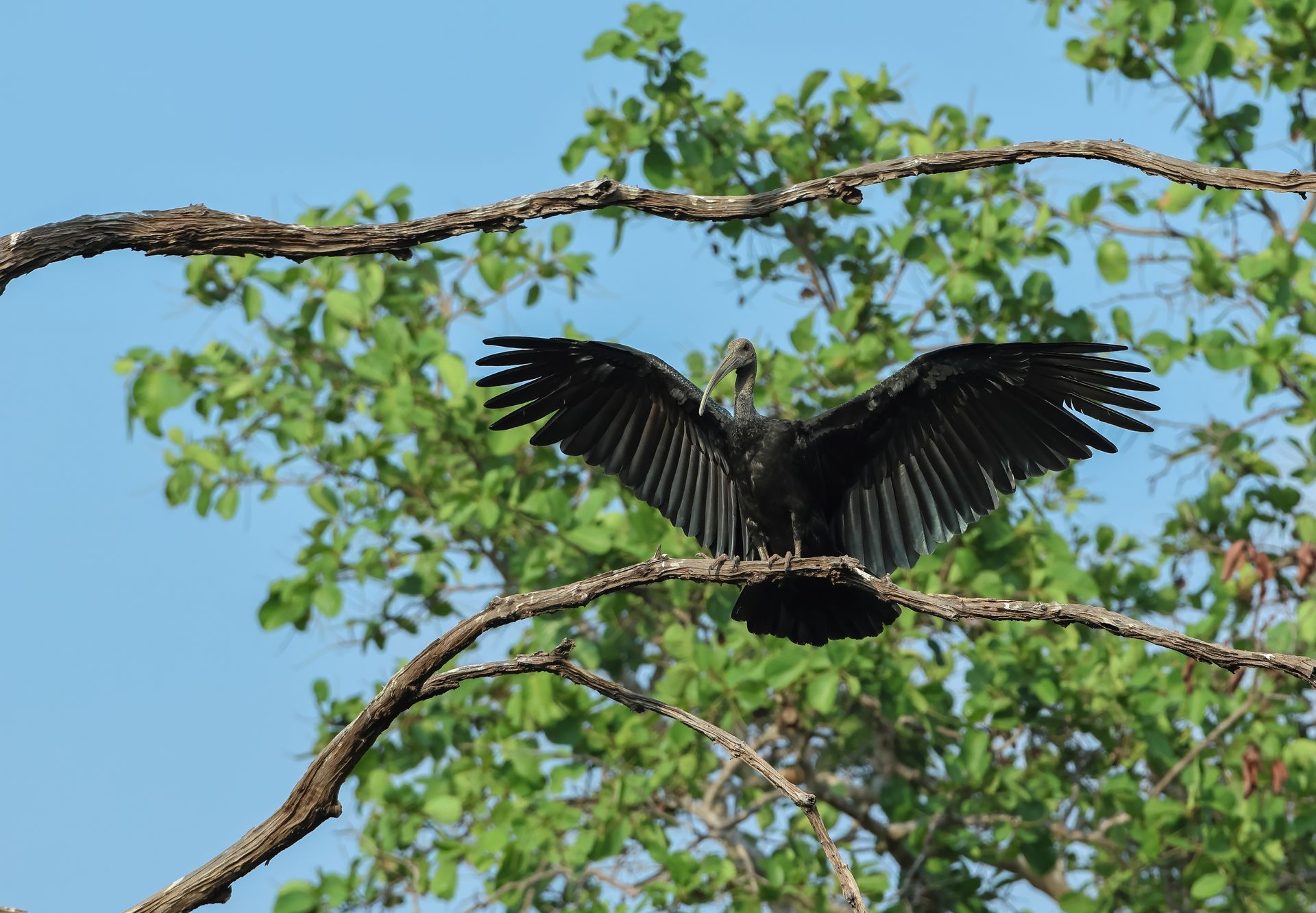
The Giant Ibis is Cambodia's national bird and the largest ibis species in the world. Once widespread across mainland Southeast Asia, it is now one of the rarest birds on Earth. Today, northern Cambodia holds the world's largest remaining population, making the country the last stronghold for this remarkable species.
A sighting of the Giant Ibis is considered one of the greatest achievements in Asian birdwatching. Guests visiting Kriel Lodge have the rare opportunity to observe this critically endangered bird in its natural habitat while directly supporting the conservation efforts that protect it.
Identification
The Giant Ibis is impossible to mistake once seen.
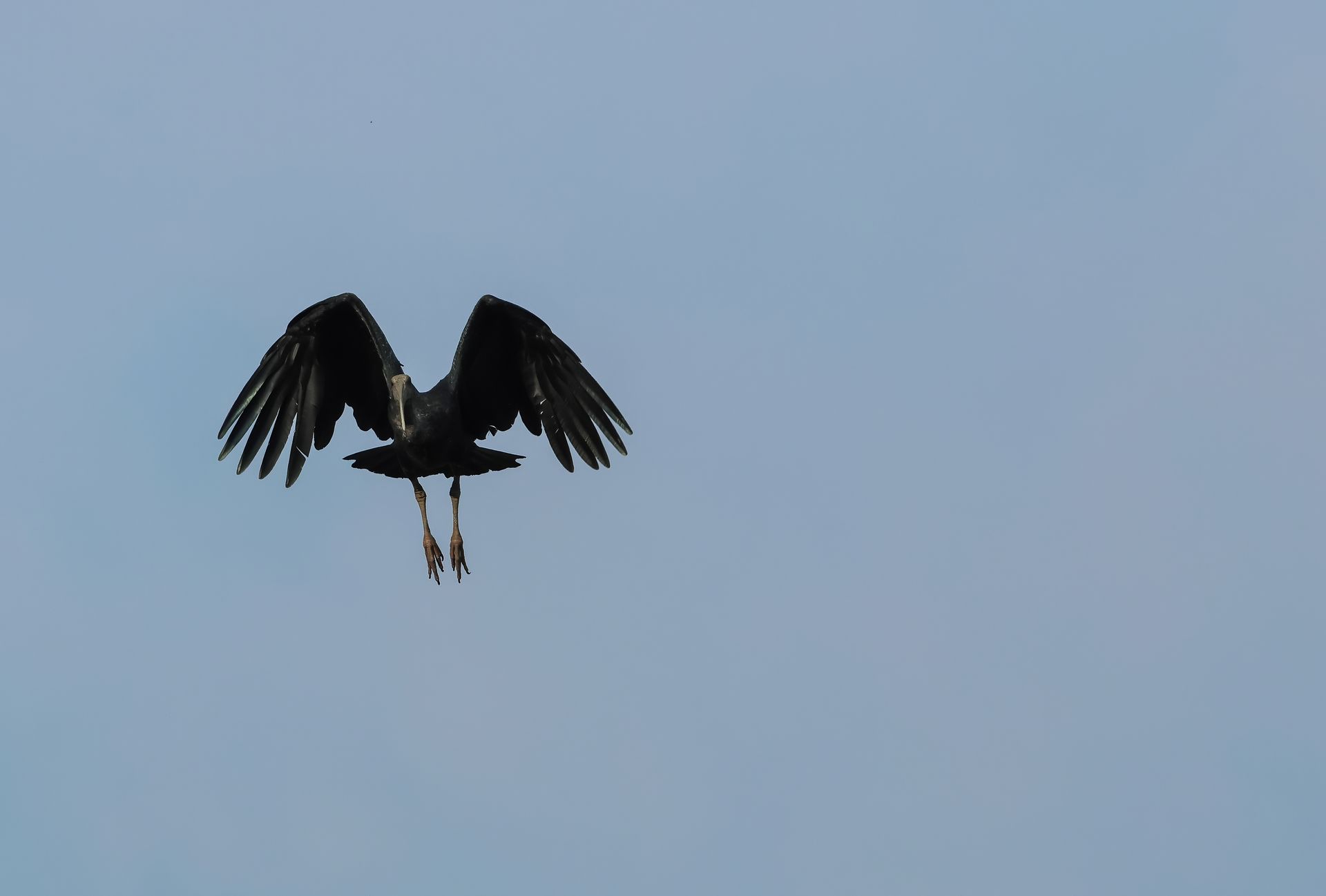
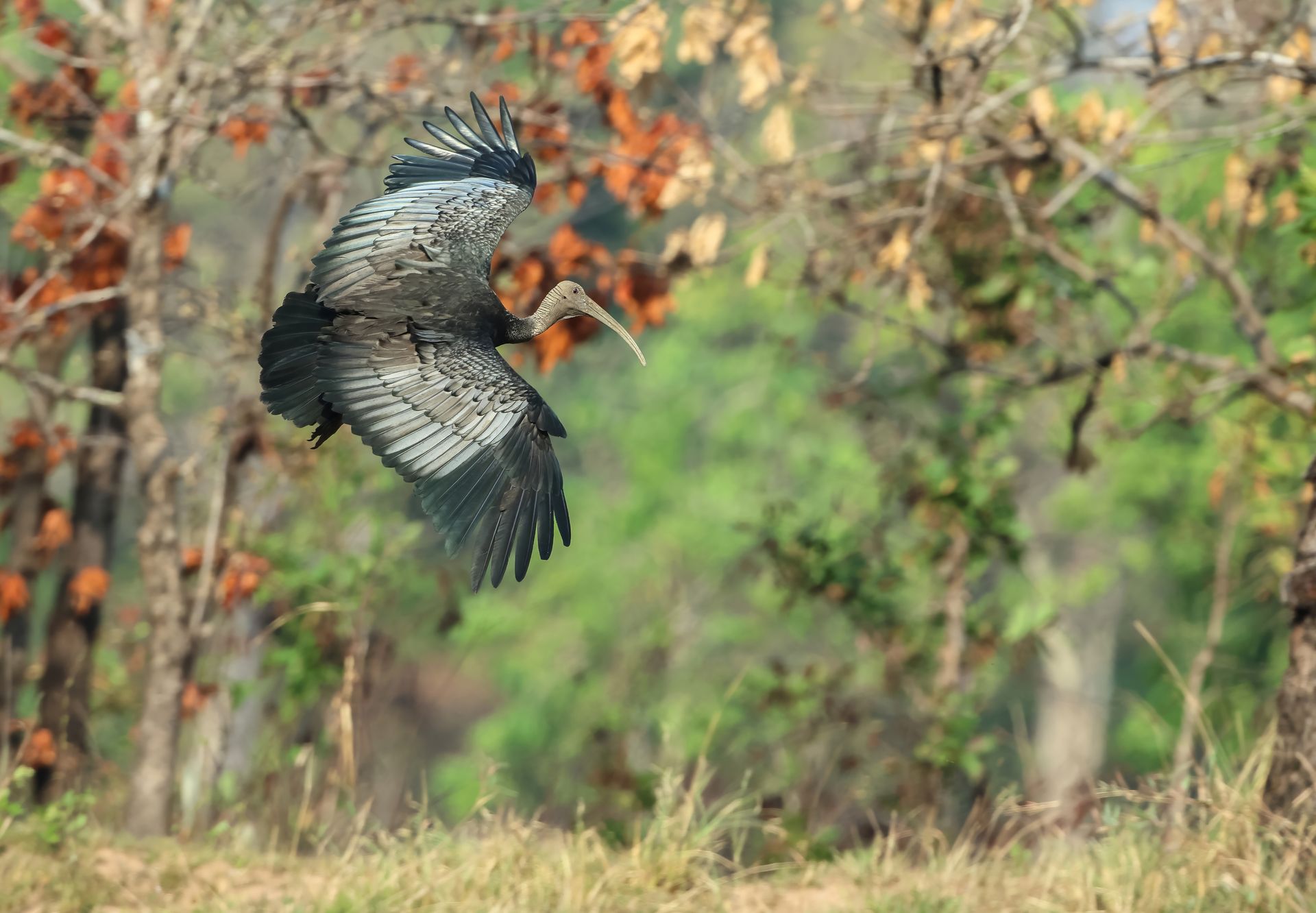
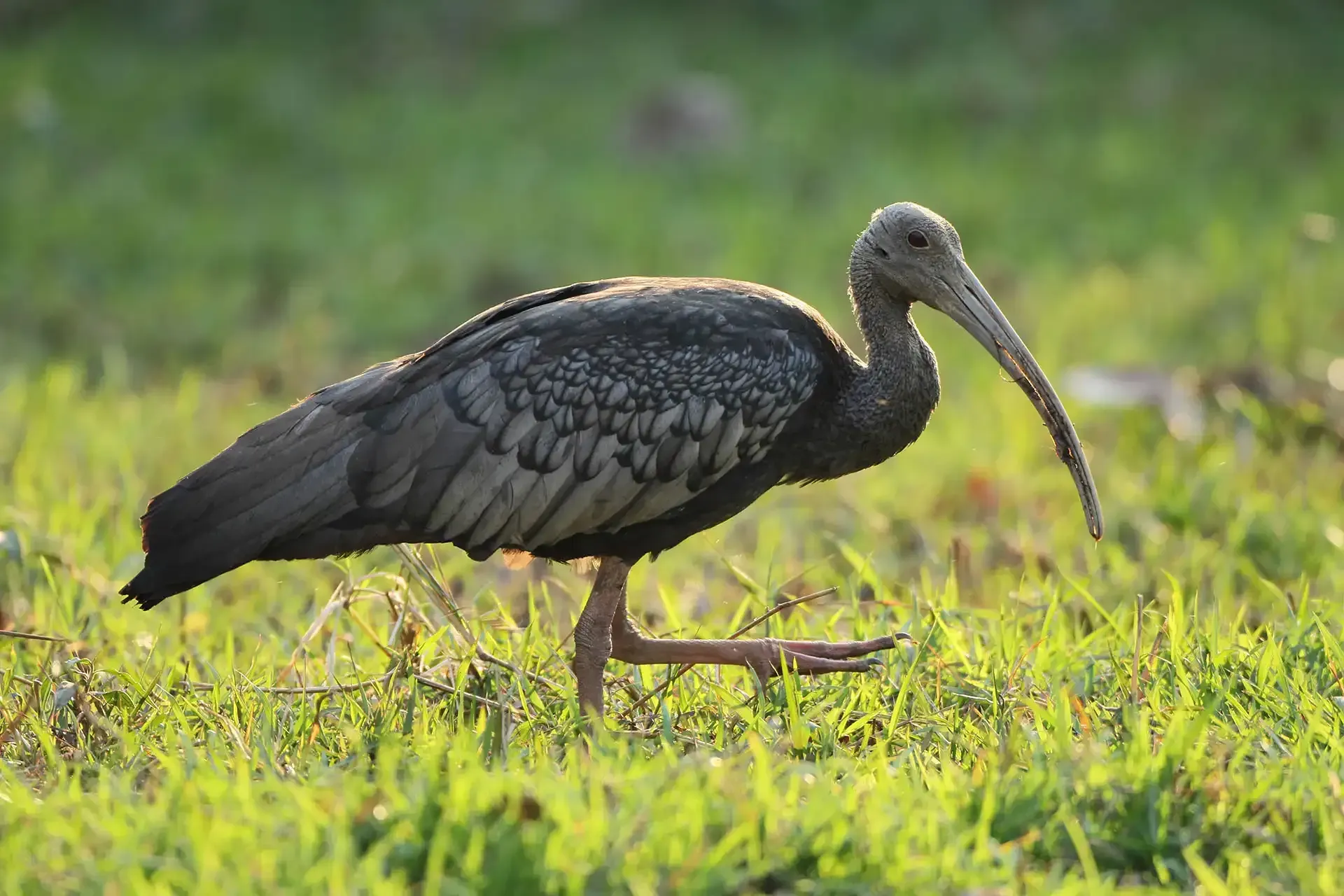
It is a large, dark brown bird with long legs and an exceptionally long, downward-curved bill adapted for probing soft mud. During the breeding season, adults develop patches of bare grey skin around the neck and head, giving them an even more distinctive appearance.
Habitat
The Giant Ibis prefers remote dry forests interspersed with seasonal wetlands and natural ponds.
During the dry season, shrinking waterholes become feeding hotspots where the birds search for food in soft mud.
They avoid heavily disturbed areas and depend on healthy forests and intact wetlands for survival.
Behaviour
Giant Ibises are generally shy and cautious birds.
They are most active shortly after sunrise and before sunset when temperatures are cooler.
Individuals are often seen alone, in pairs, or as family groups, slowly walking through wetlands while probing the mud for food.
When disturbed, they fly strongly with slow wingbeats and extend both their neck and legs fully in flight.
Did You Know?
- The Giant Ibis is Cambodia's national bird.
- It is the largest ibis species in the world.
- Fewer Giant Ibises exist than many famous endangered mammals.
- Northern Cambodia is home to most of the world's remaining wild population.
- Many international birdwatchers travel thousands of kilometers hoping to see this species.