Southern Yellow-Cheeked Crested Gibbon
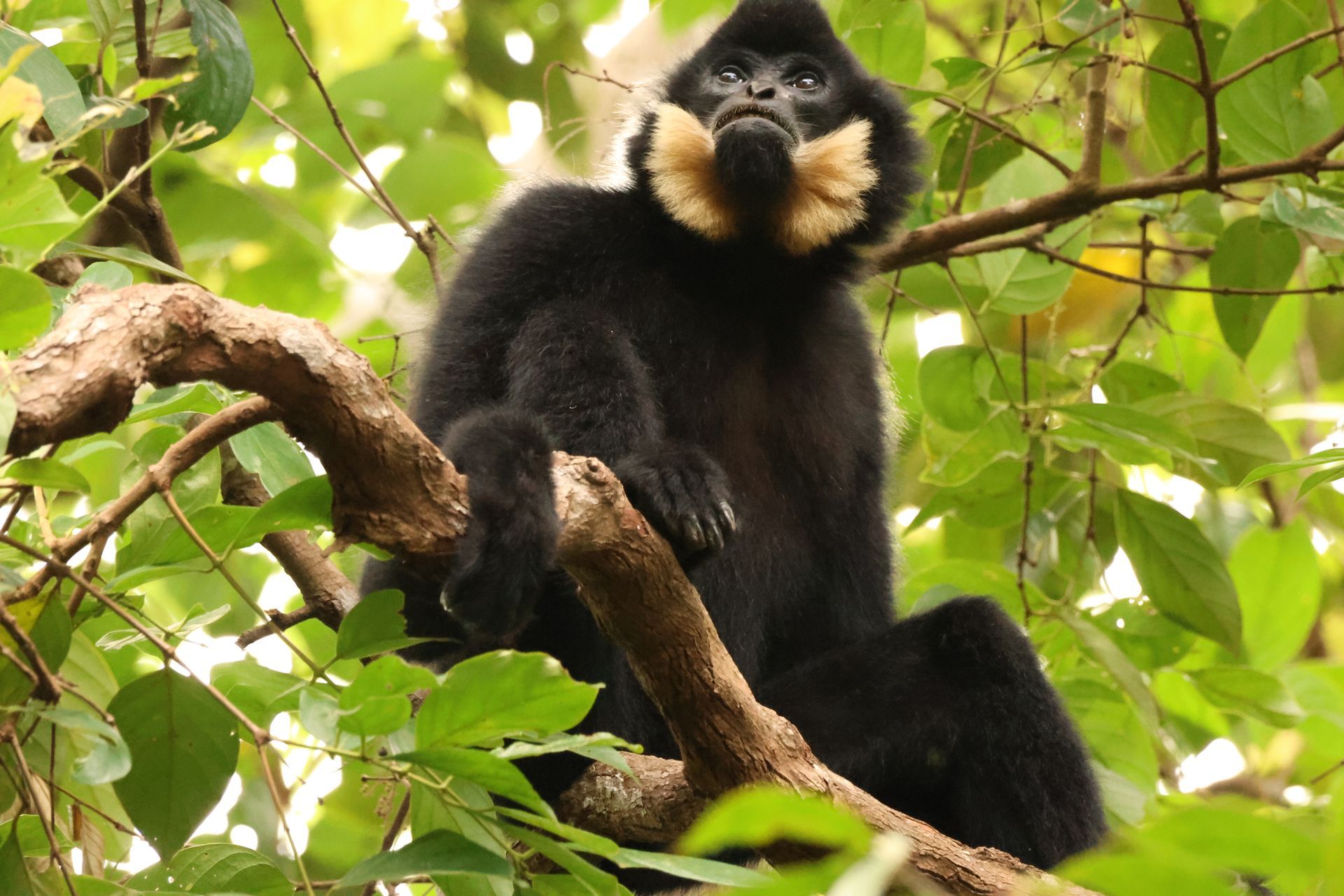
Southern Yellow-Cheeked Crested Gibbon (Nomascus gabriellae)
Diet
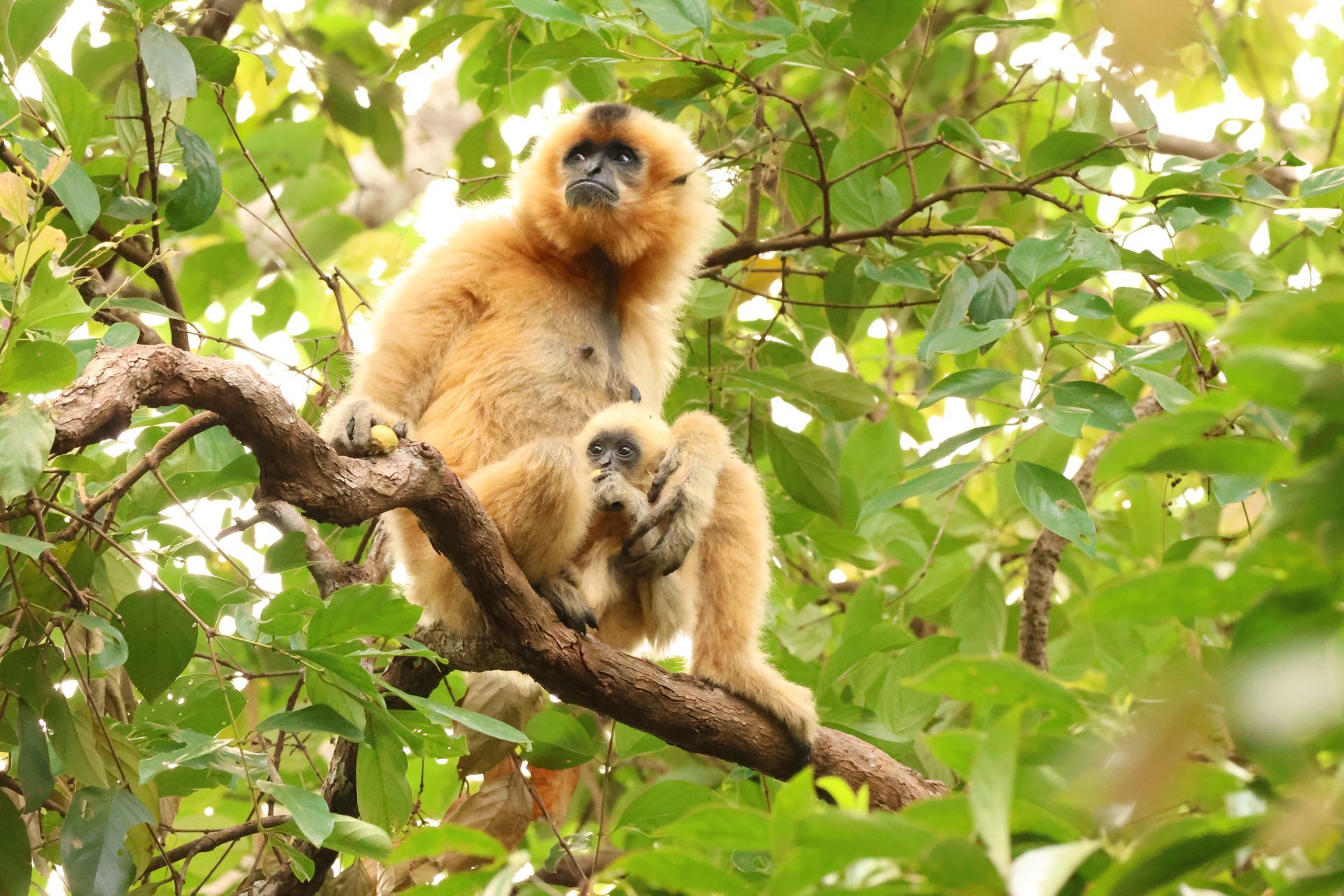
Southern Yellow-cheeked Gibbons are primarily fruit eaters.
Their diet includes:
- Wild fruits
- Figs
- Young leaves
- Flowers
- Seeds
- Tree shoots
- Occasionally insects and bird eggs
Breeding
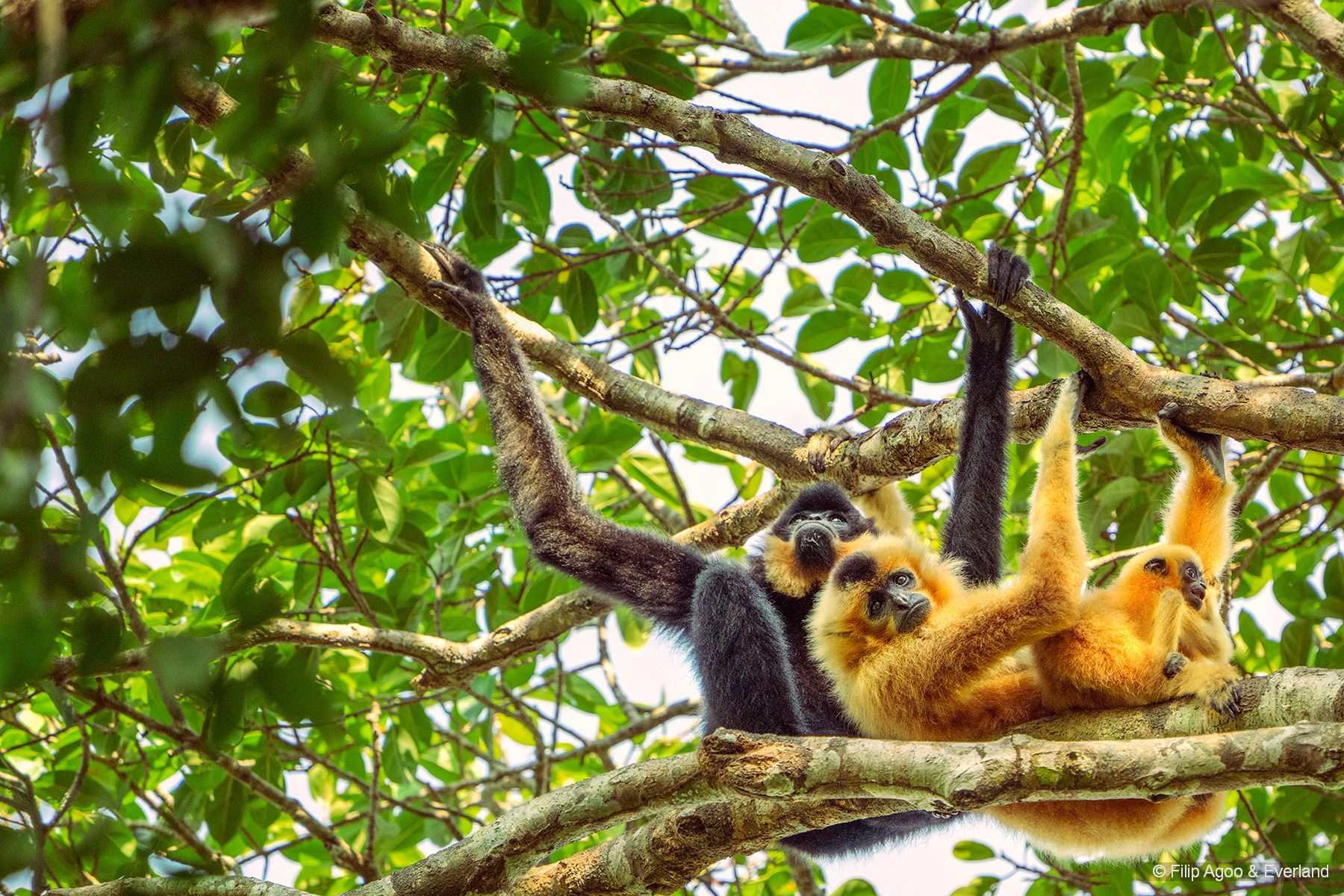
Southern Yellow-cheeked Gibbons form long-term monogamous pairs.
Females usually give birth to a single infant every two to three years after a gestation period of about seven months.
Young gibbons remain with their parents for six to eight years before leaving to establish their own territories.
Experience
About
The Southern Yellow-cheeked Gibbon is one of Cambodia's most iconic primates and the flagship species of Jahoo. Famous for its haunting morning songs and remarkable agility, this endangered ape spends almost its entire life high in the rainforest canopy.
Unlike monkeys, gibbons are apes, meaning they have no tails and possess highly developed intelligence and social behaviors. They live in small family groups and form lifelong pair bonds, with mated pairs performing spectacular duets that echo across the forest at dawn.
Identification
Southern Yellow-cheeked Gibbons are easily recognized by their long arms, lack of a tail, and graceful movement through the forest canopy.
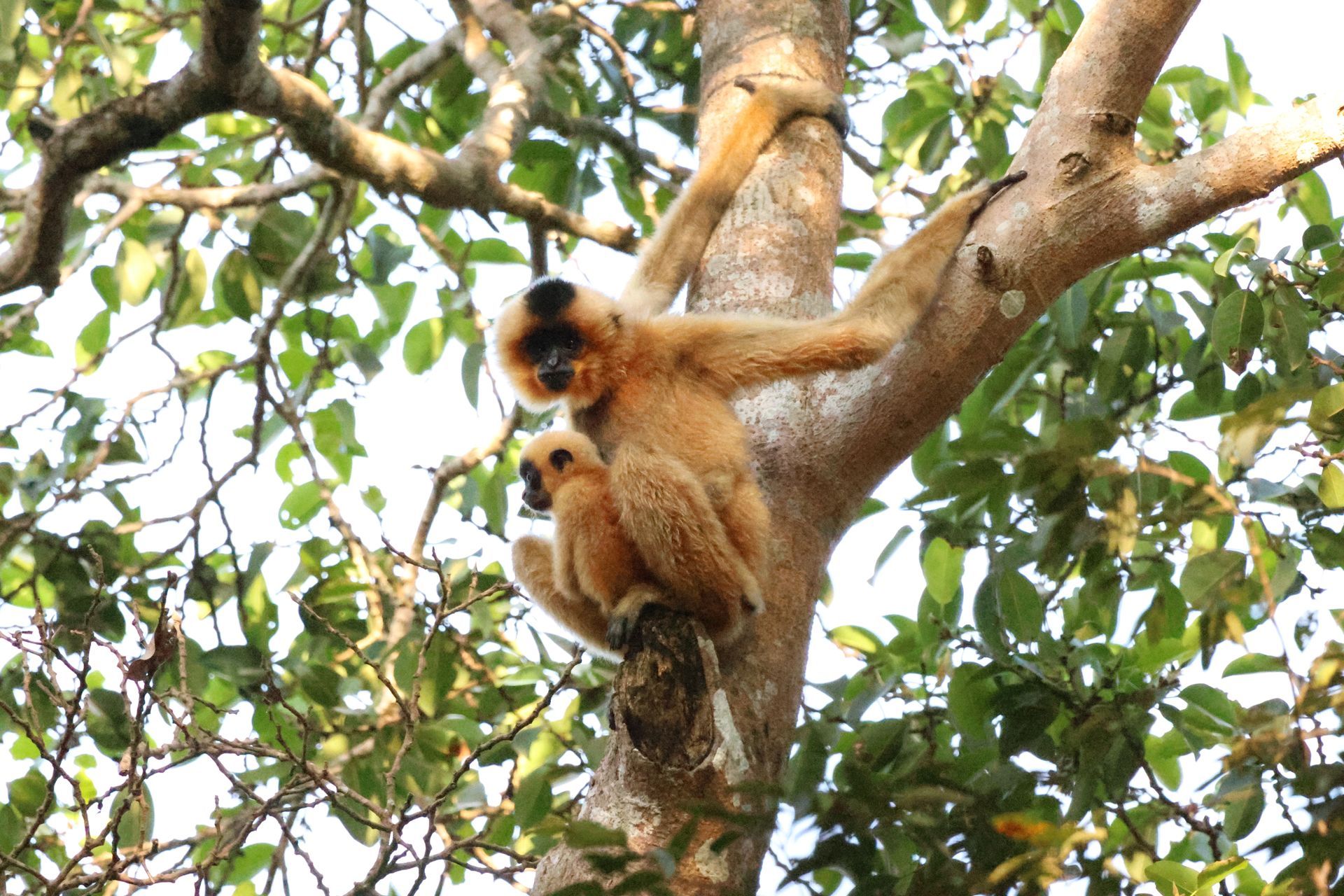
Adult males have glossy black fur with bright golden-yellow cheek patches, while adult females are light beige to golden in color with a distinctive black cap on the top of the head. Young gibbons are born with pale fur, turn black during infancy, and females gradually regain their lighter coloration as they mature.
Behaviour
Gibbons are among the most agile mammals on Earth.
Using a form of movement called brachiation, they swing effortlessly from branch to branch using their powerful arms, covering distances of up to 15 meters in a single swing.
Did You Know?
One of the highlights of a Jahoo experience is hearing the forest awaken with the calls of Southern Yellow-cheeked Gibbons.
At sunrise, mated pairs perform loud, complex duets that can travel several kilometers through the forest.
These songs help:
- Defend territory
- Strengthen pair bonds
- Communicate with neighboring families
- Announce their presence